Alright, I’ll be straight with you — July and August in Tokyo are brutal. The humidity alone will have you questioning your life choices within about twenty minutes of stepping outside. But here’s the thing: if you’re willing to push through it, Japanese summer delivers some of the most spectacular festivals you’ll ever experience anywhere in the world. Here’s how to make the most of it.
The Sky on Fire: Fireworks (Hanabi)
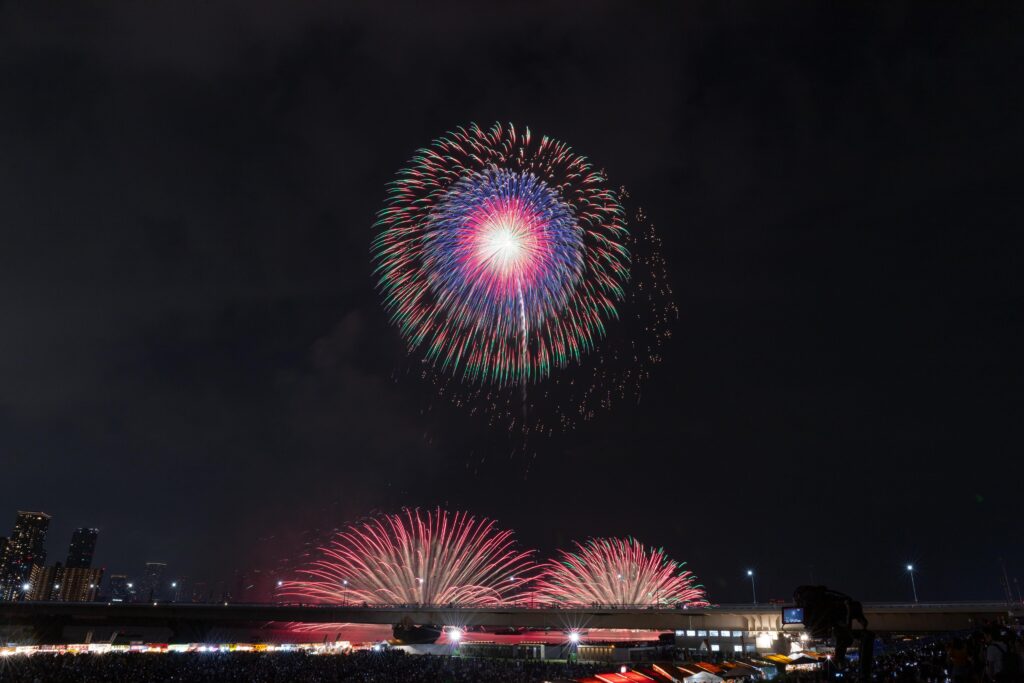
Japanese fireworks are in a completely different league. We’re not talking about a suburban council display on Australia Day — we’re talking 20,000+ shells choreographed to music, lighting up the entire sky over a river while tens of thousands of people in yukata watch from the banks. It’s genuinely jaw-dropping.
Sumida River Fireworks Festival
Date: 26th of July (Sat) ,2026 *weather depending
This is the big one — the most famous fireworks event in Tokyo and one of the largest in the country. Two separate launchpads fire simultaneously, and the display goes for about an hour and a half. The viewing area near Tokyo Skytree is legendary, but the whole riverside precinct comes alive for the evening.
- Crowd warning: This event draws close to a million people. Yes, really. Arrive several hours early if you want a decent spot, and brace yourself for the post-show train chaos (more on that below)
- Practical tip: Many locals book riverside restaurant seats or pay for designated viewing areas well in advance — worth considering if you’d rather have a guaranteed spot with a cold drink in hand
Edogawa Fireworks Festival
Date: 1st of August (Sat) 2026 *weather depending
A slightly more relaxed option than Sumida, set along the Edogawa River on the border between Tokyo and Chiba. The display is still seriously impressive, the crowd is more manageable, and the riverbank atmosphere is genuinely lovely.
- Local tip for Fireworks: Hire or buy a yukata (lightweight summer kimono) for the evening — you’ll see locals everywhere in them, they’re surprisingly comfortable in the heat, and they make for an experience that feels properly immersive rather than just touristy. Pick one up at a department store or a second-hand shop earlier in your trip
Dance the Night Away: Bon Odori
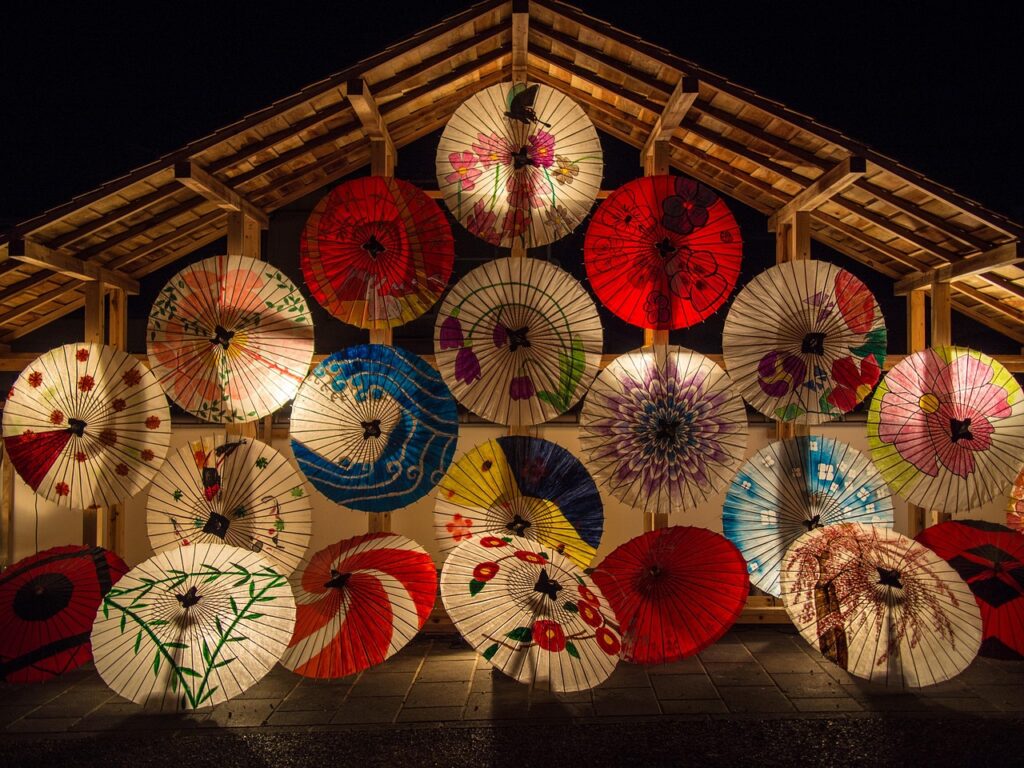
Bon Odori is a traditional folk dance performed during the Obon season to honour ancestors — but in practice, the events feel more like a massive, joyful street party with food stalls, lanterns, drumming, and everyone dancing in circles around a central tower. Tourists are always welcome to join in, and nobody cares if you get the steps wrong.
Roppongi Hills Bon Odori (Late August)
Set in the open plaza of one of Tokyo’s most modern precincts, this one is particularly accessible for first-timers. The contrast of traditional dancing against the Roppongi Hills architecture is pretty memorable, and the whole event has a welcoming, laid-back energy.
Tsukiji Hongwanji Bon Odori (Late July)
This one is special. Dancing in the courtyard of a stunning Buddhist temple while food stalls from the nearby Tsukiji market serve up some of the best street food in the city — it’s a combination that’s hard to beat. The temple building itself is worth seeing regardless of the festival.
High Energy: Traditional Matsuri
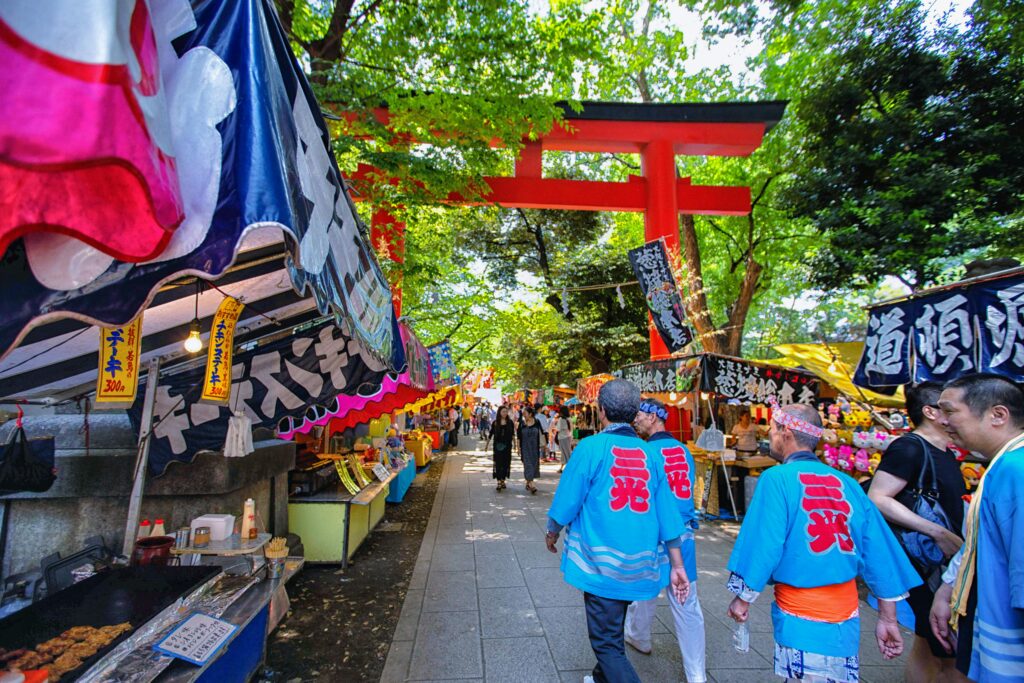
Fukagawa Hachiman Matsuri (Mid-August)
One of Tokyo’s big three festivals, held every three years in full scale (with smaller versions in between — check the current year’s schedule). What makes this one completely unique is the “water pouring” tradition: as teams of locals carry enormous portable shrines (mikoshi) through the streets, spectators line the route and absolutely drench them with buckets of water to help them cool down.
- What to expect: The atmosphere is electric — taiko drumming, chanting, crowds going absolutely mental with their buckets, and shrine carriers who somehow keep going through the whole thing
- Fair warning: If you’re anywhere near the procession route, you will get wet. Wear something you don’t mind soaking, and leave your good camera at the hotel or bring a waterproof case
- Why it’s worth it: This is one of the most viscerally exciting festival experiences in Tokyo. It’s chaotic, it’s loud, and it’s completely unforgettable
Harajuku Culture: Super Yosakoi
Date: 29th-30th of August 2026
If you find yourself in Tokyo at the end of August, do not skip this. Over 100 teams from across Japan descend on Harajuku and Yoyogi Park to perform yosakoi — a high-energy, modern style of dance performed in elaborate, colourful costumes with traditional instruments and pounding music. The skill level on display is extraordinary, and the costumes alone are worth the trip.
- Entry: Completely free
- Vibe: Loud, colourful, joyful, and unlike anything you’ll have seen before
- Practical tip: Yoyogi Park has multiple stages running simultaneously, so you can wander between performances and catch different teams throughout the day. Give yourself at least a couple of hours
Local Tip: How to survive the heat
Stay hydrated — seriously
Japan’s vending machines are everywhere, and during summer they’re a genuine lifesaver. Look for Pocari Sweat or Aquarius — they’re electrolyte drinks that do a far better job of keeping you going in the humidity than plain water alone. You’ll find them cold and ready to go on virtually every street corner.
Hit the konbini cooling aisle
As covered in the [Konbini Guide], convenience stores stock a surprisingly brilliant range of summer survival gear — cooling neck rings you can freeze overnight, Gatsby ice wipes for a quick refresh mid-day, and cold towels that actually work. Pick a few up early in your trip and thank yourself later.
The post-fireworks crowd hack
After any major fireworks display, every train station within walking distance turns into absolute bedlam. Don’t make the rookie mistake of rushing straight to the station with everyone else. Instead, find a nearby izakaya, grab a cold drink, order some food, and wait it out for an hour or so. The crowds clear surprisingly quickly, and you’ll have a much more enjoyable journey home — plus you’ve turned the wait into part of the night.
Tokyo in summer is genuinely tough going, but the festivals make it worth every sweaty second. Come prepared, pace yourself through the hottest parts of the day, and lean into the chaos after dark. That’s when the city really comes alive.
Tanoshinde! (Enjoy Tokyo!)